Langsung ke konten utama

Rumah Tempe Indonesia: A Local Answer to Food Security Challenges in Indonesia

As the world faces growing concerns over food security, Indonesia—a country rich in agricultural resources and traditional knowledge—is seeking sustainable solutions that not only address hunger, but also support health, the economy, and the environment. One such solution lies in a humble, centuries-old food: tempeh. And at the heart of tempeh innovation is Rumah Tempe Indonesia (RTI).
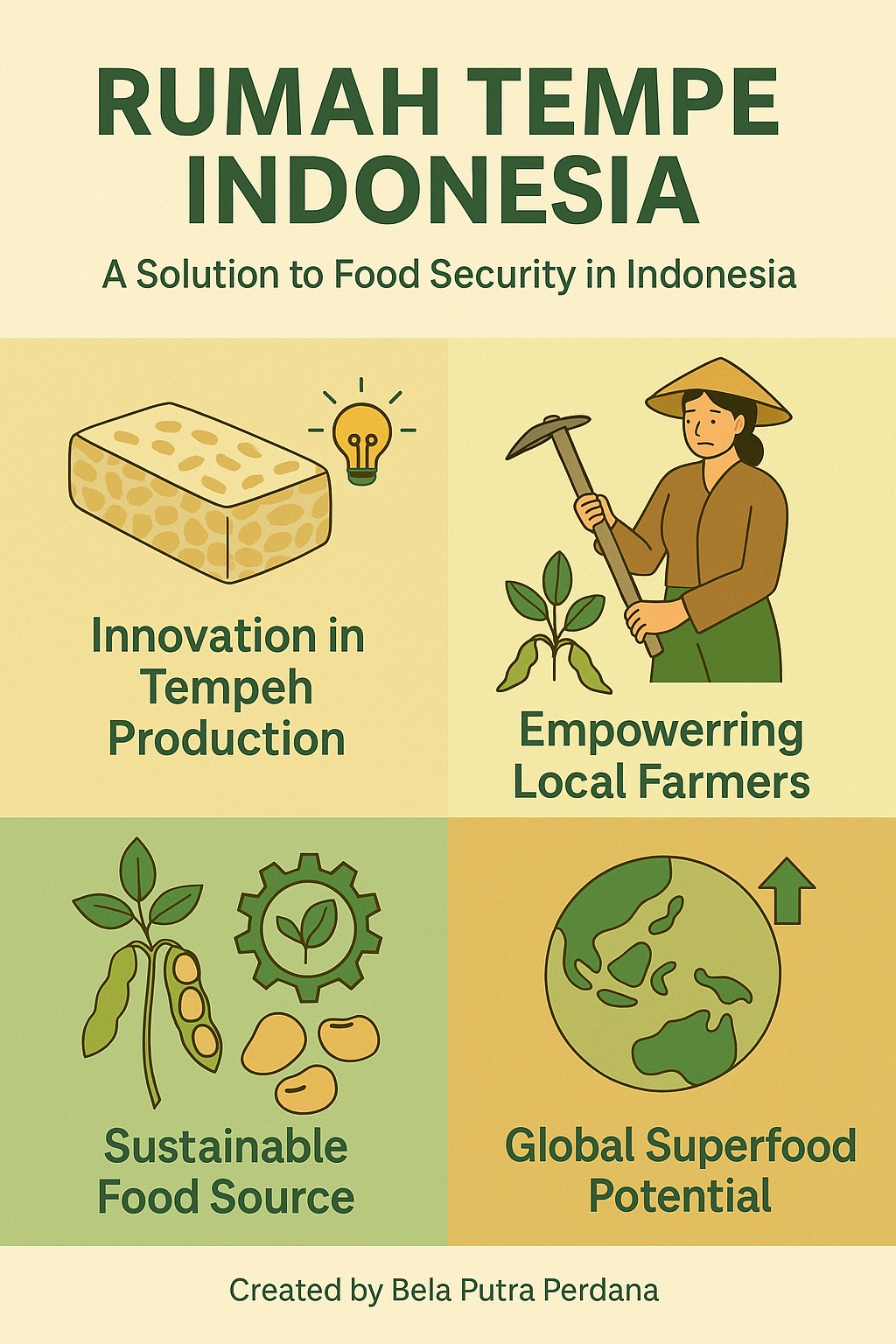


A Center for Sustainable Innovation

Located in Bogor, West Java, Rumah Tempe Indonesia was established in 2012 as a modern facility dedicated to producing high-quality tempeh using safe, hygienic, and sustainable practices. More than just a production center, RTI functions as a hub for research, education, and community empowerment, aiming to elevate tempeh from a traditional food to a strategic asset in achieving national food resilience.

Why Tempeh? A Superfood for the People

Tempeh, made from fermented soybeans, is a highly nutritious and affordable protein source. It contains all essential amino acids, is rich in probiotics, and is versatile in a wide range of dishes. Because it is plant-based, tempeh production requires significantly less land and water than animal protein, making it ideal for sustainable food systems.

In a country where millions still struggle with access to nutritious food, promoting tempeh as a staple can help ensure food availability, accessibility, and nutritional adequacy.

Empowering Communities, Reducing Dependency

One of RTI's key missions is to empower local producers with knowledge and technology. By training small and medium enterprises in hygienic and efficient tempeh-making processes, RTI helps build self-reliant food systems at the community level. This decentralization reduces reliance on expensive imports or centralized food chains that are vulnerable to disruption.

Furthermore, RTI encourages the use of locally grown, non-GMO soybeans, which strengthens local agriculture and supports smallholder farmers.

A Model of Food Sovereignty

Food security is not just about having enough to eat—it’s also about having control over how food is produced, distributed, and consumed. RTI’s model aligns with the principles of food sovereignty, where communities can shape their food systems according to their own needs, cultures, and resources.

By promoting tempeh—a culturally rooted, nutritious, and environmentally friendly food—Rumah Tempe Indonesia empowers Indonesians to feed themselves, on their own terms.

A Scalable Solution for the Future

In the face of climate change, rising food prices, and increasing population pressure, scalable, low-cost, and sustainable food solutions are essential. Tempeh, with its low carbon footprint and high nutritional value, fits this role perfectly.

Rumah Tempe Indonesia shows how local wisdom, when combined with modern innovation, can create powerful solutions to global problems. Its approach can inspire similar models not just across Indonesia, but throughout Southeast Asia and beyond.


Conclusion:
Rumah Tempe Indonesia stands as a beacon of how traditional food can play a modern role in securing the future. As Indonesia moves toward a more resilient, equitable food system, tempeh—and RTI—may very well lead the way.


Bela Putra Perdana

Komentar

Postingan populer dari blog ini

Diskusi: Love your self (You can't love someone until you learn to love yourself)

Hallo Bels Apa kabar? semoga kamu selalu diberikan kesehatan dan nama baik. Bahasan kali ini sedikit berbeda, karna kita akan membahas mencintai diri sendiri melalui tanya jawab yang terjadi dalam diskusi sebuah grup whatsapp. Sebuah forum independen yang beranggotakan pemuda-pemudi dari berbagai aktivitas, universitas maupun lembaga kepemudaan dengan cita-cita bersama membangun mental diri dengan semangat kontribusi bersama. Forum itu bernama Love your self Indonesia. Dengan visi mewujudkan generasi muda Indonesia yang memiliki kualitas hidup dan kesehatan mental yang baik. Mereka mempunyai misi diantaranya mengadakan kegiatan-kegiatan terkait dunia komunikasi psikolog di masyarakat, mengadakan pelatihan sebagai sarana terapi untuk diri sendiri, menjadi jembatan bagi masyarakat yang peduli terkait mental health dan penderita gangguan kesehatan mental. ** Dalam diskusi kali ini mereka menghadirkan seorang narasumber atau yang biasa disebut Bomber seorang psikolog klinis dan jug...

Bedah buku Aroma Karsa-Dewi 'Dee' Lestari

Review novelnya Dewi 'Dee' Lestari. Judul buku: Aroma Karsa Penulis: Dewi 'Dee' Lestari Penerbit: PT. Bentang Pustaka Terbit: Cetakan pertama, Maret 2018 ISBN: 978-602-291-4631 Genre: Misteri, petualangan (Fiksi) Tebal: xiv+710 halaman; 20 cm Harga; Rp. 125.000 Pengantar dan sinopsis Dari sebuah lontar kuno, Raras Prayagung mengetahui bahwa Puspa Karsa yang dikenalnya sebagai dongeng, ternyata tanaman sungguhan yang tersembunyi di tempat rahasia. Obsesi Raras memburu Puspa Karsa, bunga sakti yang konon mampu mengendalikan kehendak dan cuma bisa diidentifikasi melalui aroma, mempertemukannya dengan Jati Wesi. Jati memiliki penciuman luar biasa. Di TPA Bantar Gebang, tempatnya tumbuh besar, ia dijuluki si Hidung Tikus. Dari berbagai pekerjaan yang dilakoninya untuk bertahan hidup, satu yang paling Jati banggakan, yakni meracik parfum. Kemampuan Jati memikat Raras. Bukan hanya mempekerjakan Jati di perusahaannya, Raras ikut mengundang Ja...

Entrepreneurial Marketing: What I Learned from Building a Business and Teaching in the Classroom

 I didn’t first learn marketing from textbooks. I learned it from the field, from small failures, limited resources, and decisions made with more courage than certainty. Only later did the term Entrepreneurial Marketing begin to make sense, because it perfectly described what I had been practicing all along. As both an entrepreneur and a lecturer, I live in two worlds that are often seen as separate: practice and theory. In reality, they constantly inform and strengthen each other. Building a Business Taught Me What Marketing Really Means When I started my business journey, I didn’t have a large marketing budget or a dedicated team. What I had was a product, belief, and the determination to survive. Every marketing decision began with a simple question: what can I do today with the resources I already have? Many strategies were not born from complex market research, but from direct conversations with customers, feedback from partners, and real-time market responses. I experime...